
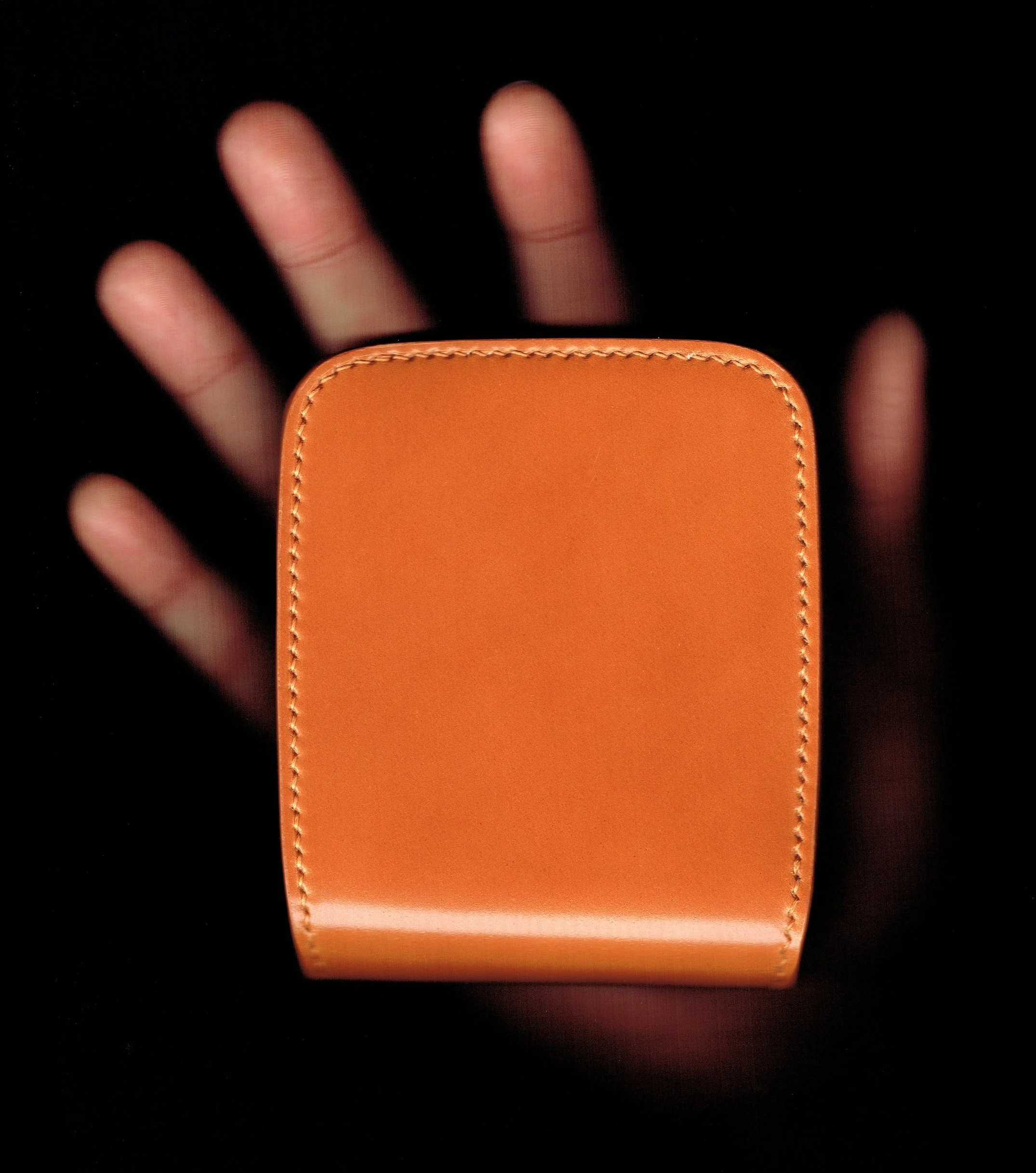
Crafted with a Human Touch
It all begins with an idea. Maybe you want to launch a business. Maybe you want to turn a hobby into something more. Or maybe you have a creative project to share with the world. Whatever it is, the way you tell your story online can make all the difference.
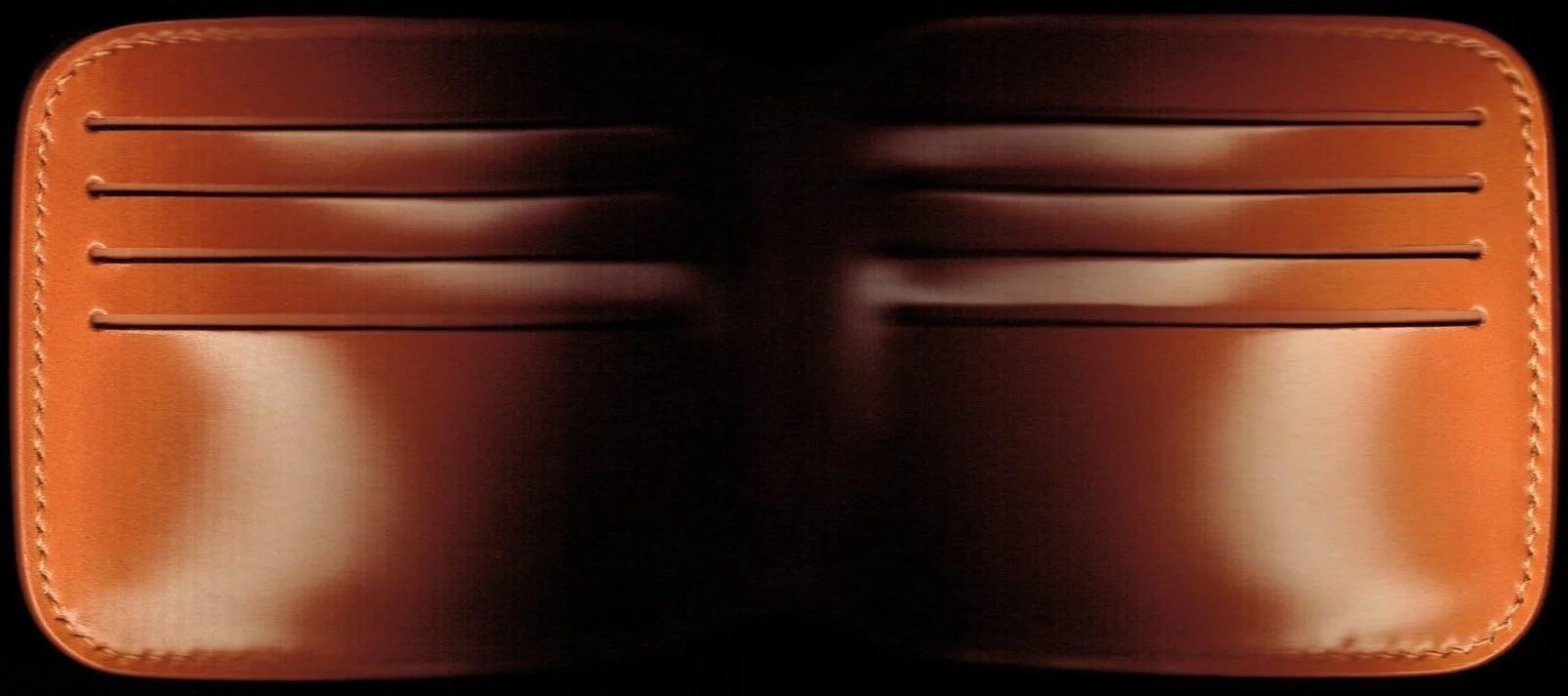
Solid State
The minimalistic design of the wallet has been imagined to eliminate multiple pieces resulting in a simpler and more seamless looking final product. In addition, through the simplification of the design, this wallet reduces multiple common failure points in the traditional wallet design, leading to a wallet that is sure to last a lifetime, keeping the wallet in use and not the landfill.
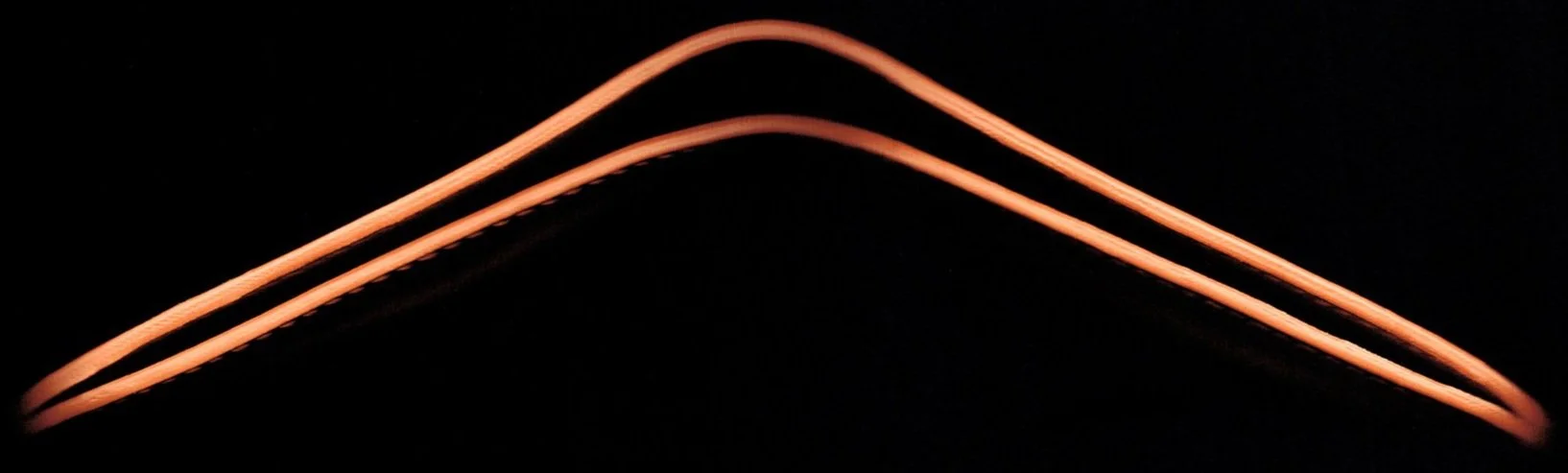
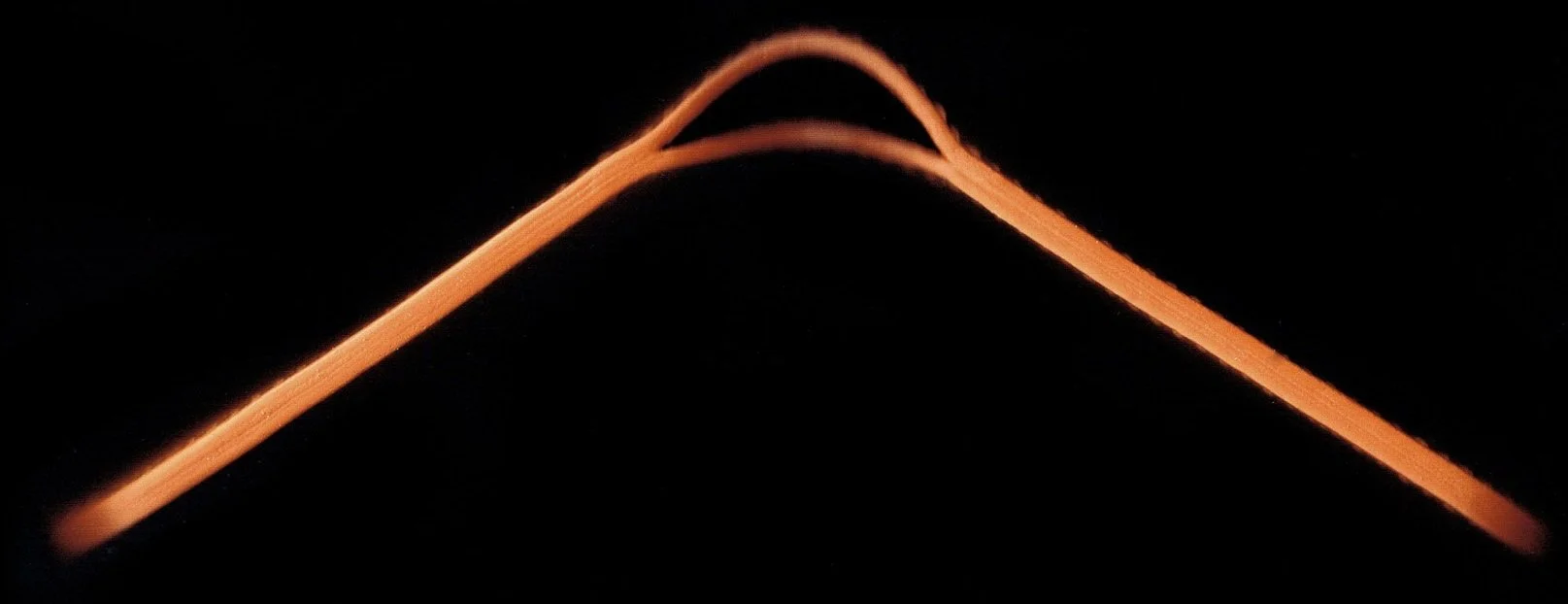

Purely Natural
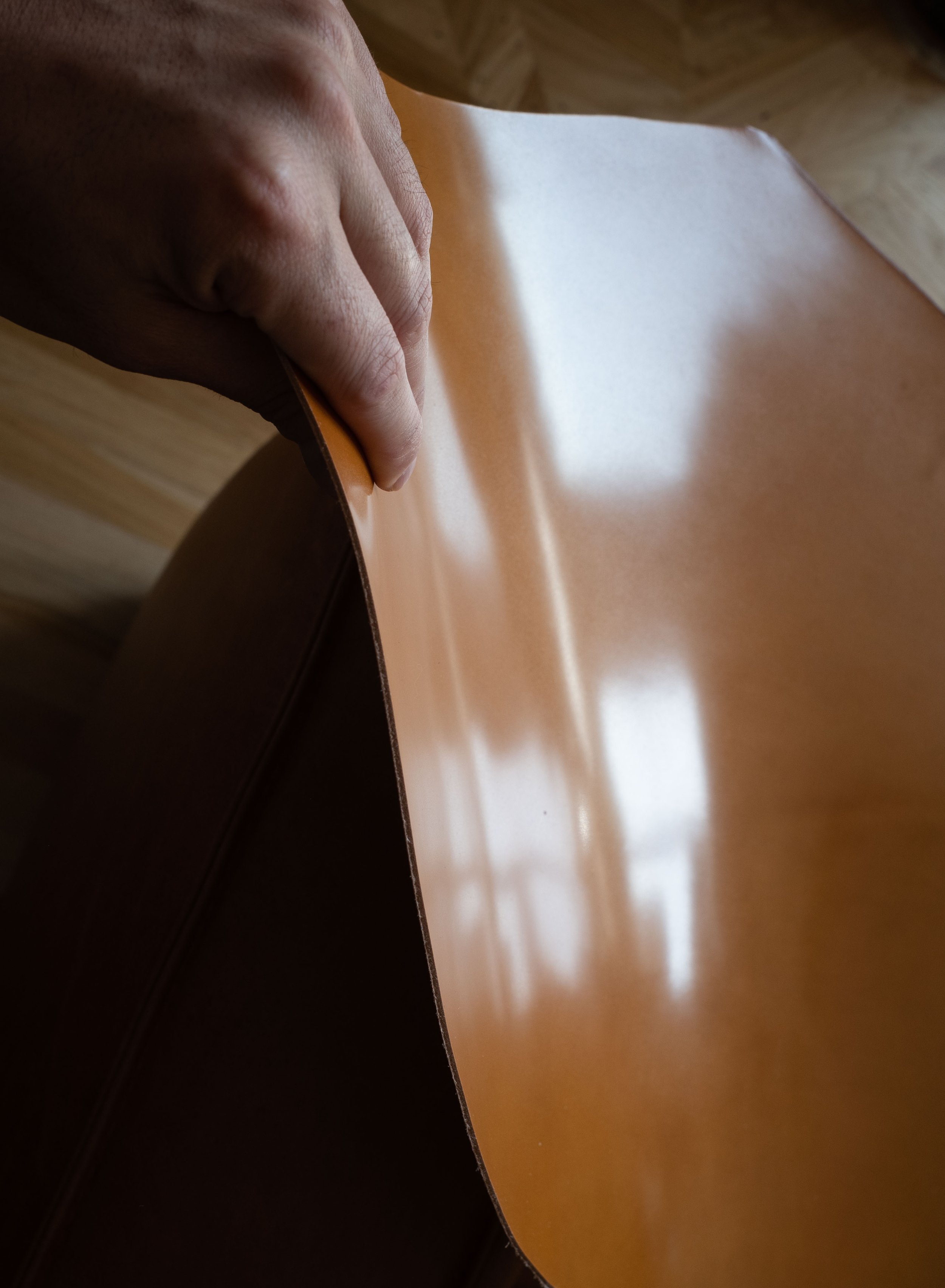
Very few tanneries produce cordovan in general and we sought out the best in the world. Shinki Hikaku is a tannery in Japan produces the most revered and most expensive horsehide in the world. These hides are tanned using only the bark of Mimosa trees avoiding the cheaper, quicker tanning process that results from the use of heavy metals like chromium.

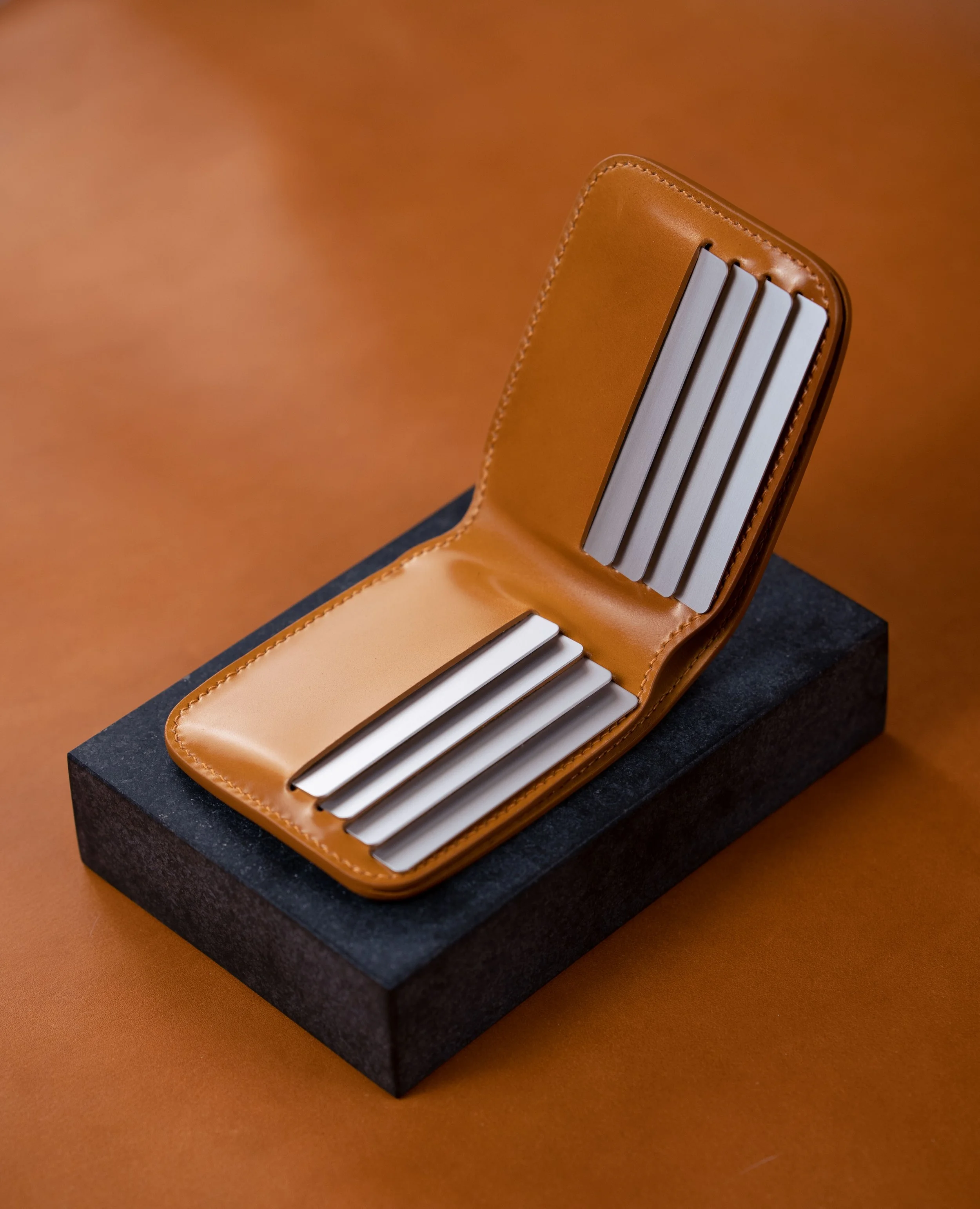
Clamshell Cordovan Bifold Wallet in Camel
Introducing our sculptural bifold wallet—a blend of timeless allure and contemporary sophistication. Carefully handcrafted using the rarest, most durable leather in the world, it exudes a sense of prestige and exclusivity. It’s sleek design effortlessly fits into your pocket, embodying a refined sense of understated elegance.
Experience the enduring legacy of age-old leatherworking techniques, ensuring longevity and a touch of individuality.
$550
Exterior & Interior: Japanese Shell Cordovan
Lining: Italian Vegetable Tan Leather
Dimensions: 89mmx58mmx15mm
Thread: Japanese Bonded Polyester
Handmade in USA
Loam Philosophy
Come with me on my journey to create products that are created with master craftsmanship, extremely durable and yet sustainable materials that have a unique modern design
Loam abides by 3 tenets:
Durability
Top-grade Natural Materials in Harmony w Earth
Handmade Craftsmanship
Result: a timeless product that will last a lifetime
At the core of Loam’s philosophy is the idea that products should be built to last. In order to reduce waste
We would like to build products for the discerning person. People who are considerate of how a thing was made.
We believe that a truly luxury product is built to last and that the things that we use should This requires a careful consideration of the materials, construction techniques and aesthetic design.
Materials
In terms of materials, both the outer and inner panels are made out of Japanese shell cordovan. Shell cordovan is a rare and highly sought after leather due to its exceptionally durable qualities.
[it is a leather derived from the butt of a horse. Due to the limitation of 2 butt cheeks per an animal, cordovan is expensive and rare. What results however is a material who’s fiber structure is extremely dense that lends to its legendary durability. Cordovan shoes will often need to be resoled many times before the shell wears out. Very few tanneries produce cordovan in general and we sought out the best in the world. Shinki Hikaku is a tannery in Japan produces the most revered and most expensive horsehide in the world. These hides are made only using natural Mimosa tannins (bark of a tree) and avoids the much cheaper and quicker tanning process that results from the use of the carcinogenic heavy metals like chromium.]
[Education around general leather knowledge. Genuine leather, top grain, full grain. chromium]
This wallet is fully lined. The interior of the bill holding section is lined with a top-grade Italian buttero vegetable tan leather (no chromium, full grain) so that the entire wallet, inside and out feels luxurious to the touch.
Our stance on the use of leather itself. Leather has lately been misconstrued to be a non sustainable material. In its place we have introduced non-leather options, “faux” leather, synthetic leather, vegan leather, leather made of fruits, etc. What most people do not know is that what ultimately makes these options have any semblance of durability is due to the use of plastics. No fake leather alternatives have the sufficient durability on its own to compete with actual leather hide.

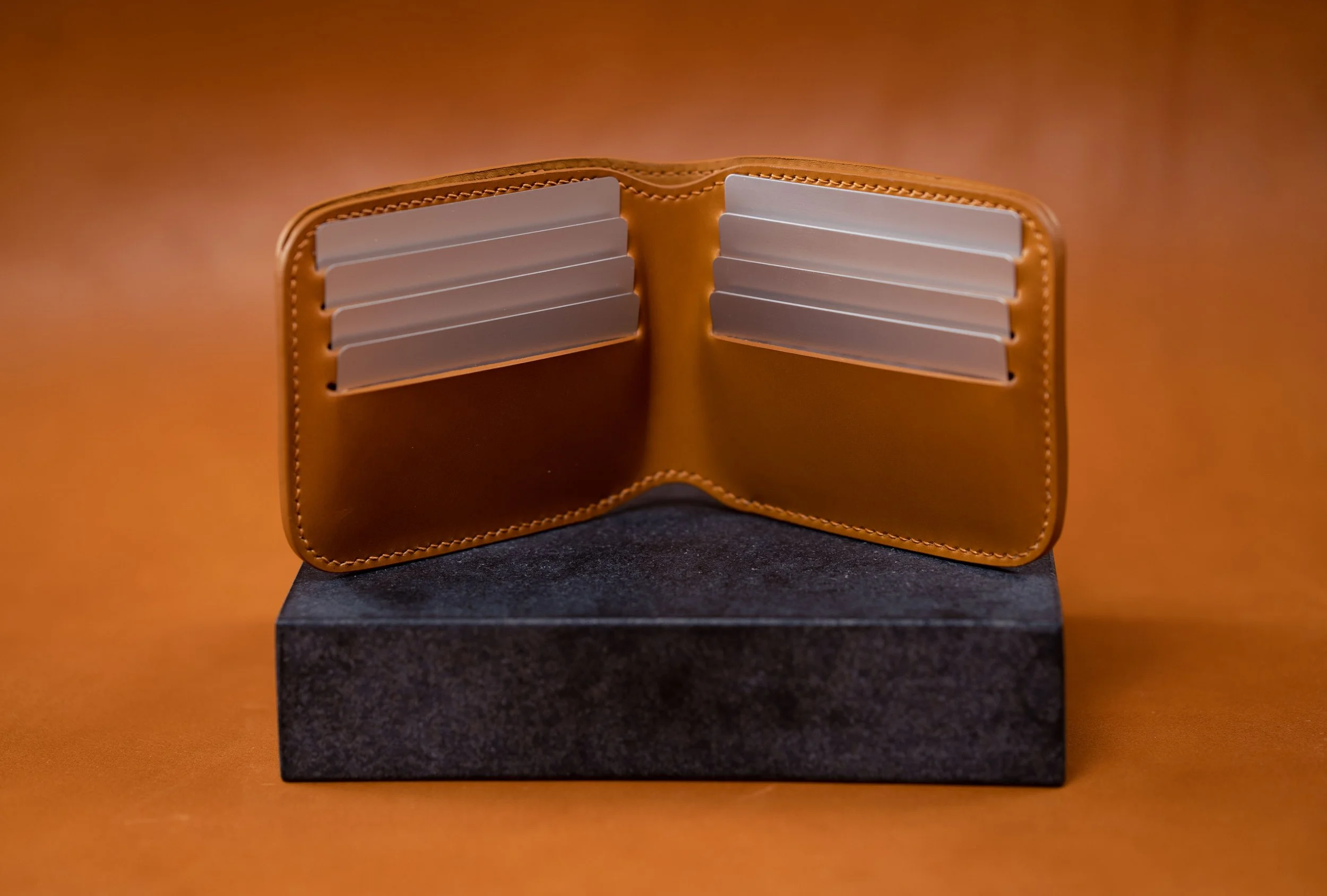
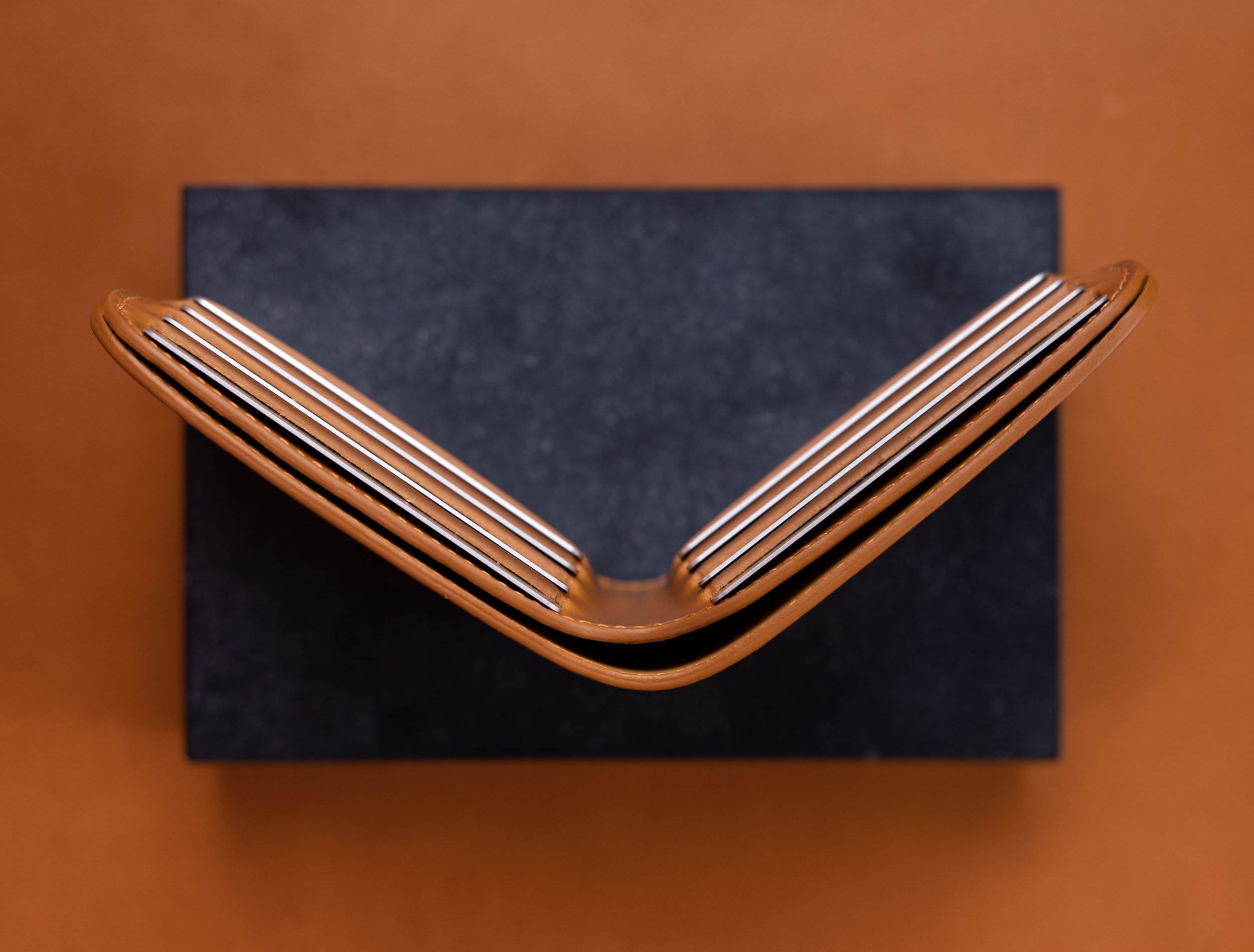
The curved, organic design of this wallet fits well in the hand and feels welcoming yet sturdy. The 6 card slots have been formed from a single panel of leather, eliminating common failure points. Seemingly simple looking, this wallet contains 11 layers of leather cleverly assembled for a discrete look.
Don’t get it wet.
6 card slots, 1 large bill slot
Inner and Exterior: Vegetable Tan Shell Cordovan
Lining: Vegetable Tan Full Grain Leather
Dimensions: 11.6 cm x 9.5 cm x 1 cm
Handmade in USA
The Leather Industry
There are roughly around 100 million cows in the United States. This equates to 1 cow for every human. When the cattle industry strips the cow of its primary product (the meat) the skin has traditionally been discarded. Instead of throwing this away leather tanneries buy this byproduct to repurpose and give what would have been waste in a landfill, a second life. This is tradition that has existed for thousands of years. When an animal is consumed for sustenance, humans have historically used every remaining part of the animal (in many cultures out of respect for the animal as well as scarcity).
If we promote the use of faux (plastic) leathers, the resulting product will never rival that of actual leather leading to the product being thrown away and to be replaced and contribute to larger plastic consumption and hence waste.
We believe that the use of plastic is a much less sustainable activity than using the remains and byproducts of the meat industry. In the scenario where people no longer eat meat and no longer create leather as a byproduct or a situation that arises where an animal is killed solely for its leather, Loam will no longer have sufficient reason to tout leather as a sustainable material and will cease to use it in favor of an alternative.
We are adamant about the reduction in the use of plastic, and using it intelligently and sparingly where its properties are utilized to its fullest. The modern human has done something truly remarkable and invented a material that cannot be broken down by nature. We believe that it is important in a long term view that we significantly reduce our usage of plastics. We will expound on these reasons later.
We align with the Iroquoian concept of seven generation stewardship. This concept urges everyone living here right now to live and work for the benefit of the seventh generation into the future. It is our hope that with our products, we can begin to think with a larger outlook on humanity and life. We must ask ourselves whether the decision we make today would benefit our children, and our children’s children’s children’s children’s children’s children’s children. If we take a wider outlook and responsibility on how our consumption today will impact the generations of the future that had no say in how the world they are born into is shaped, we cannot in good faith continue our wanton consumption (figuratively and literally) of plastics.
We acknowledge, however, that the elimination of plastic overnight is not possible. Instead we must rethink our use and relationship with plastics. We need to consciously reduce our use of it in favor of equally applicable but harmonious materials with the earth that can be integrated back into where all of our materials first came from. To this end, we believe that a well-made product that can last a lifetime that never needs to be replaced is the most sustainable consumption behavior- artifacts of higher quality to replace what is filled by the gap of inferior quality but greater quantity.
Plastic should be expensive.
We must remember that plastics will never decompose. They will simply break down into smaller pieces. This is when the real problem begins. Every piece of plastic we use today will be around forever and already the cleaning of such waste is so massive that the energy consumption of cleaning is slated to outpace the impact of cleaning it all up. This is however only if we consider plastics in a myopic view of pure energy use. The problems of plastic extend much further, and today, we are beginning to understand why this is such an issue moving forward:
Endocrine disruptor
Early puberty in women
Constant reduction of testosterone in men
Carcinogenic
Disruption of food supply
Recycling is a myth. The concept of recycling although admirable in its attempt is nothing more than a way to rationalize and appease the fact that plastic use is ultimately unsustainable and shortsighted for healthy living.
The use and effect of plastic consumption is a topic that is such a large and hairy monster that we have gotten too entrenched with that it is difficult to see a way out and this discomfort of the truth makes it difficult to face this problem.
Construction Techniques
The chunky bifold is made entirely by hand using age-old techniques of leathercrafting. Every edge of the wallet is saddle stitched by hand which is impossible for machines to do. [Saddle stitching is a technique of stitching where two threads run through the stitches and provide a superior stitch. Even if the thread were to fail, it will not unravel and the other stitch will maintain the structural integrity. This is not the case for machine stitching, where a failure of the thread will compromise the entire stitching of that thread.]
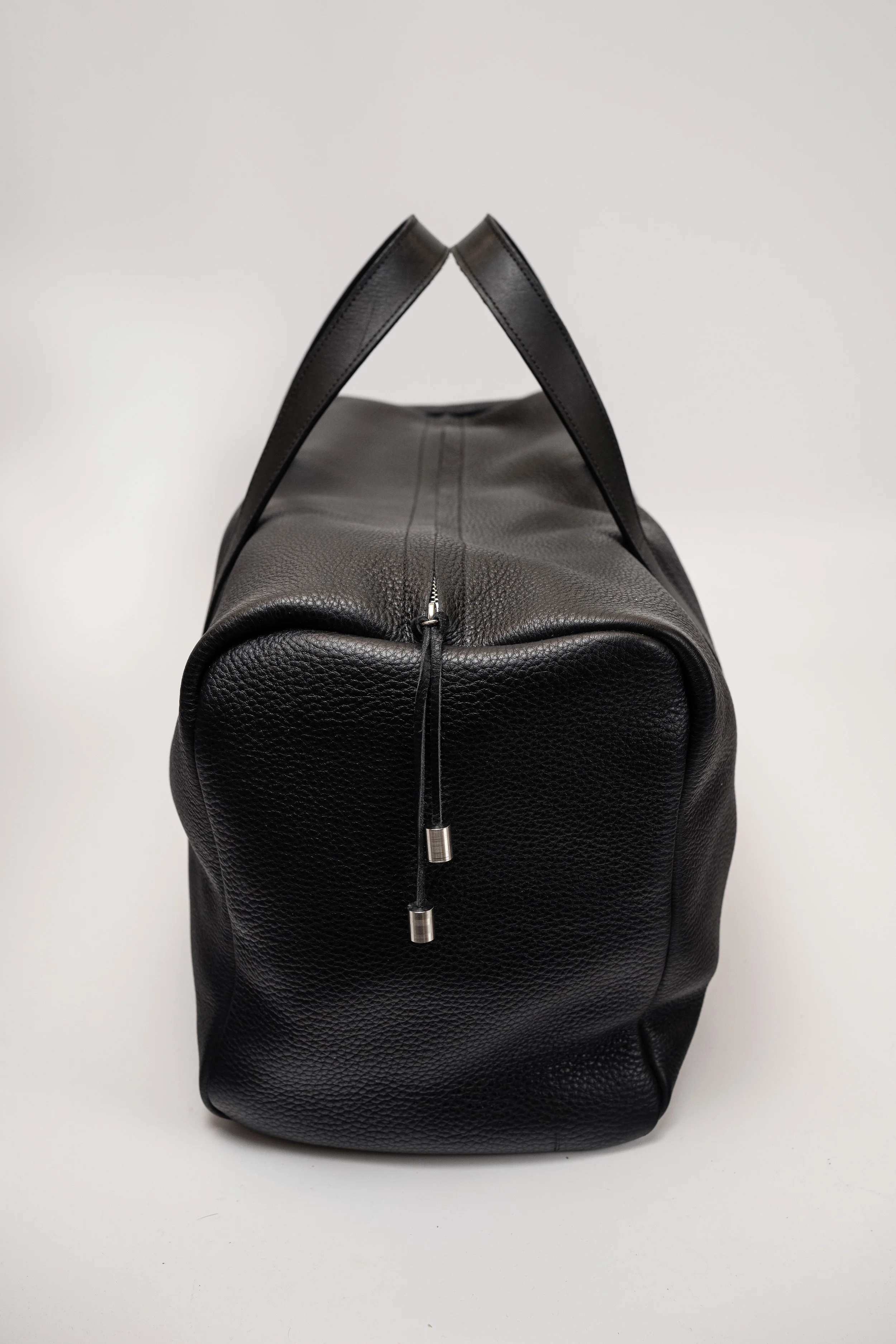

Black Duffel
A carryall weekender bag designed to look like one solid body. Hidden Italian zipper and integrated strap handle made of a smooth cowhide and vegetable tan leather.
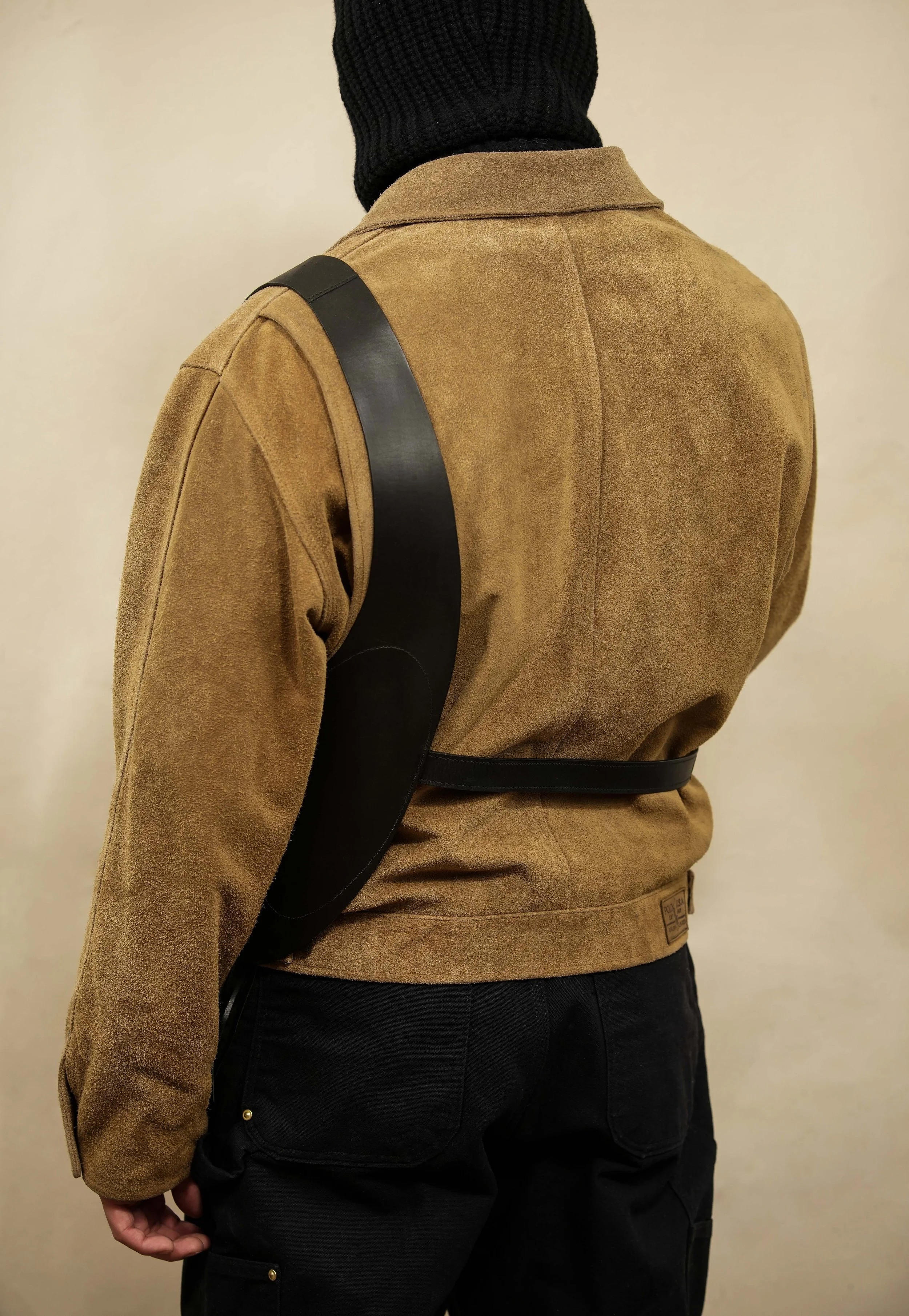
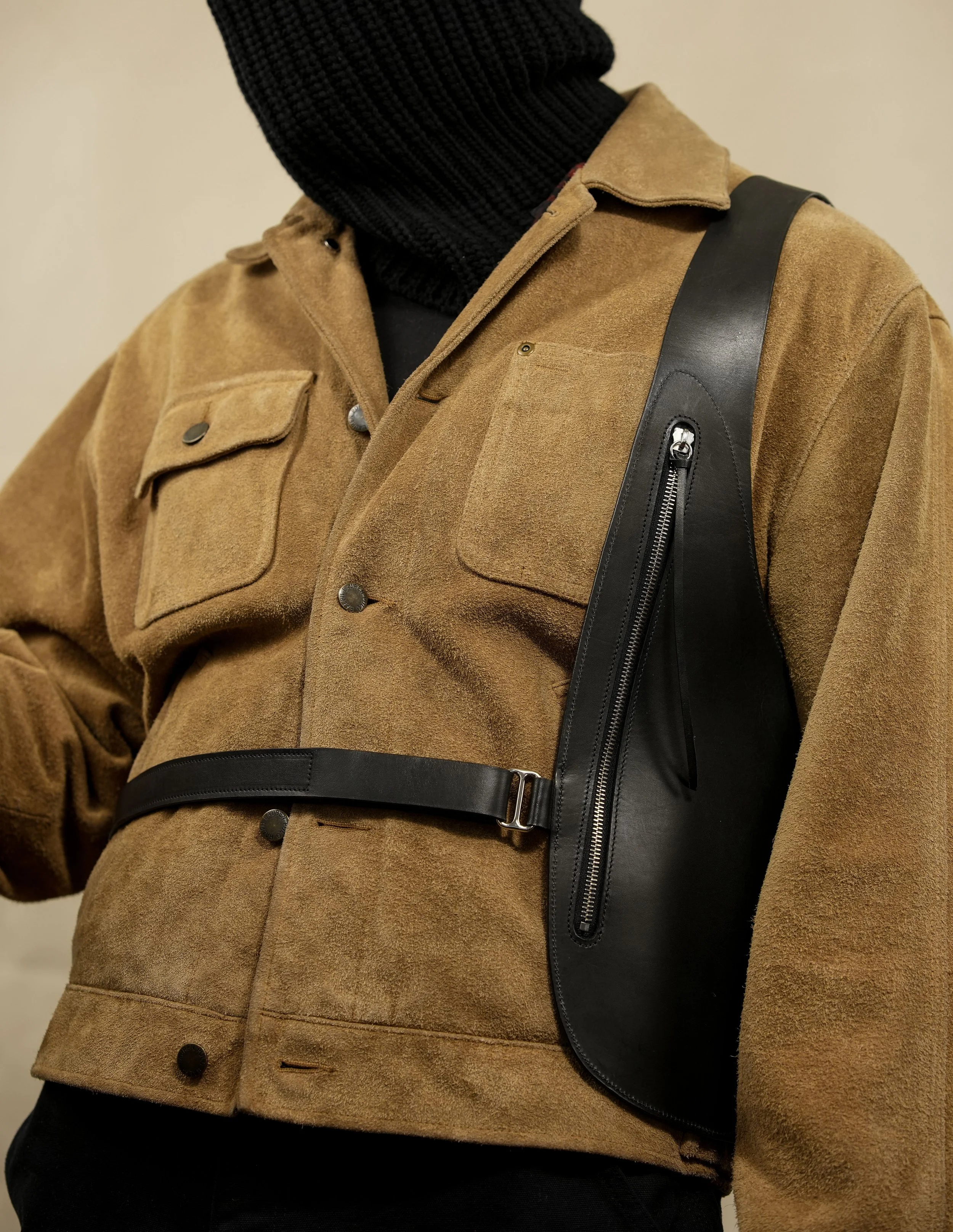
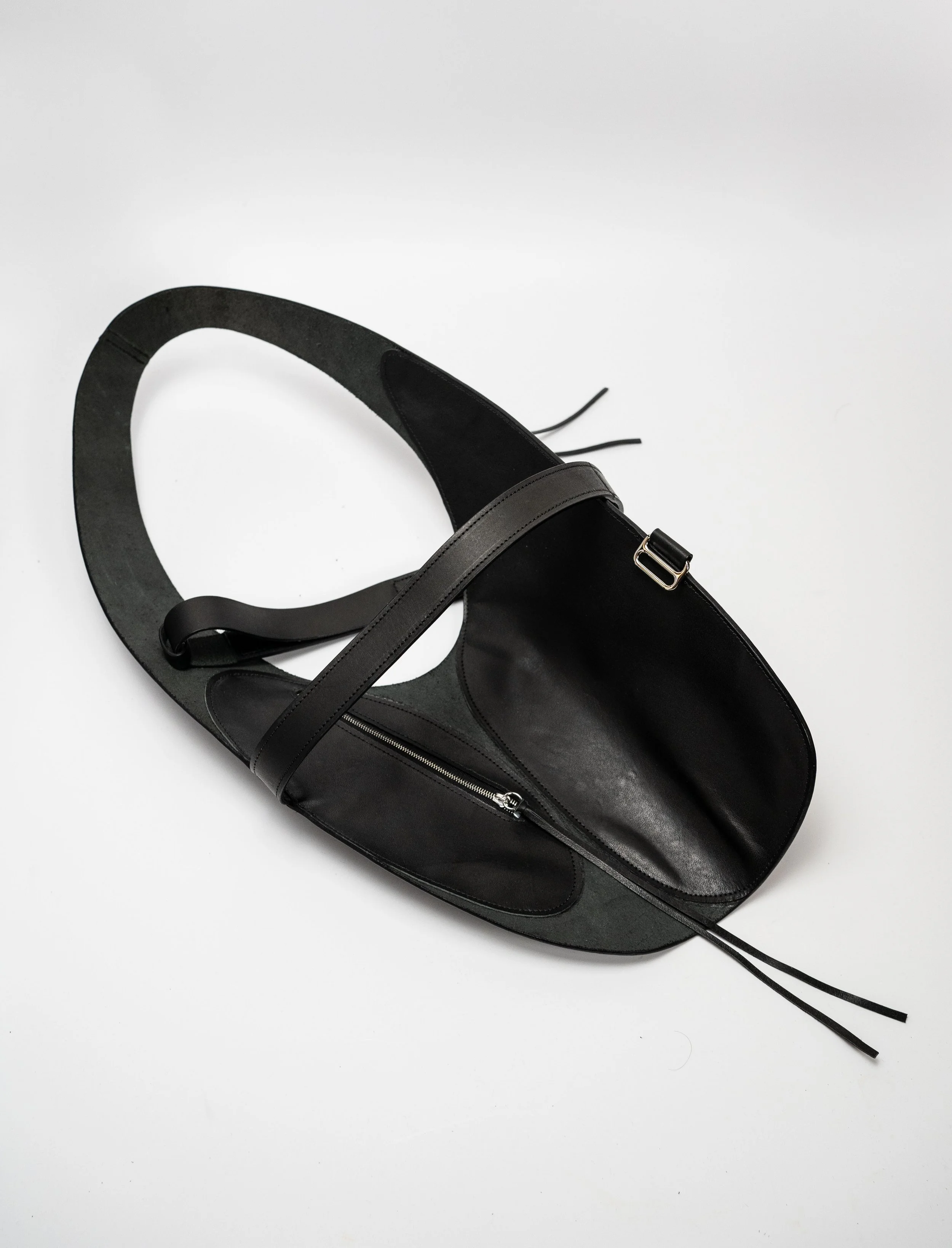
Side Harness Bag
Very few tanneries produce cordovan in general and we sought out the best in the world. Shinki Hikaku is a tannery in Japan produces the most revered and most expensive horsehide in the world. These hides are made only using natural Mimosa tannins (bark of a tree) and avoids the much cheaper and quicker tanning process that results from the use of the carcinogenic heavy metals like chromium.
$750
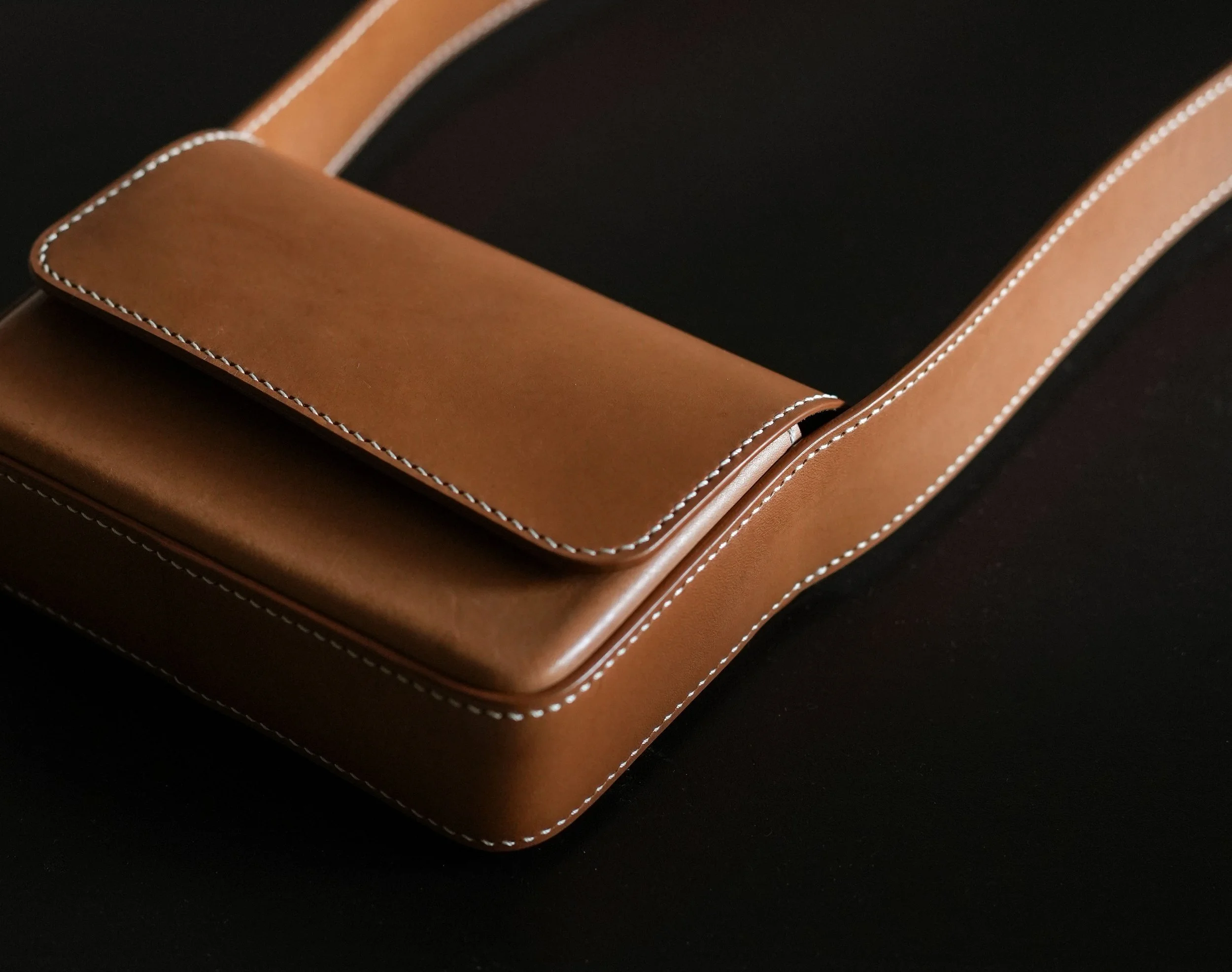
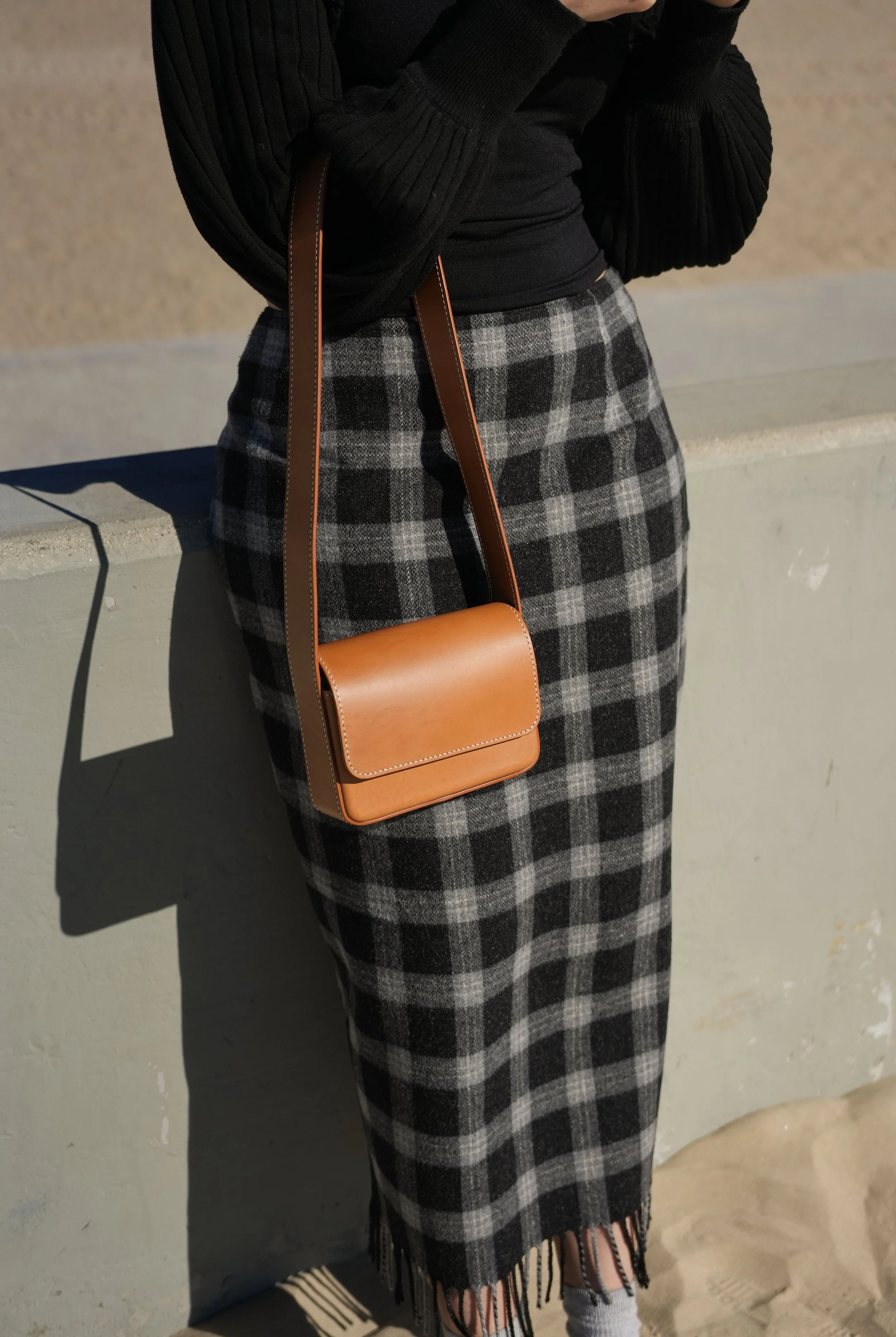
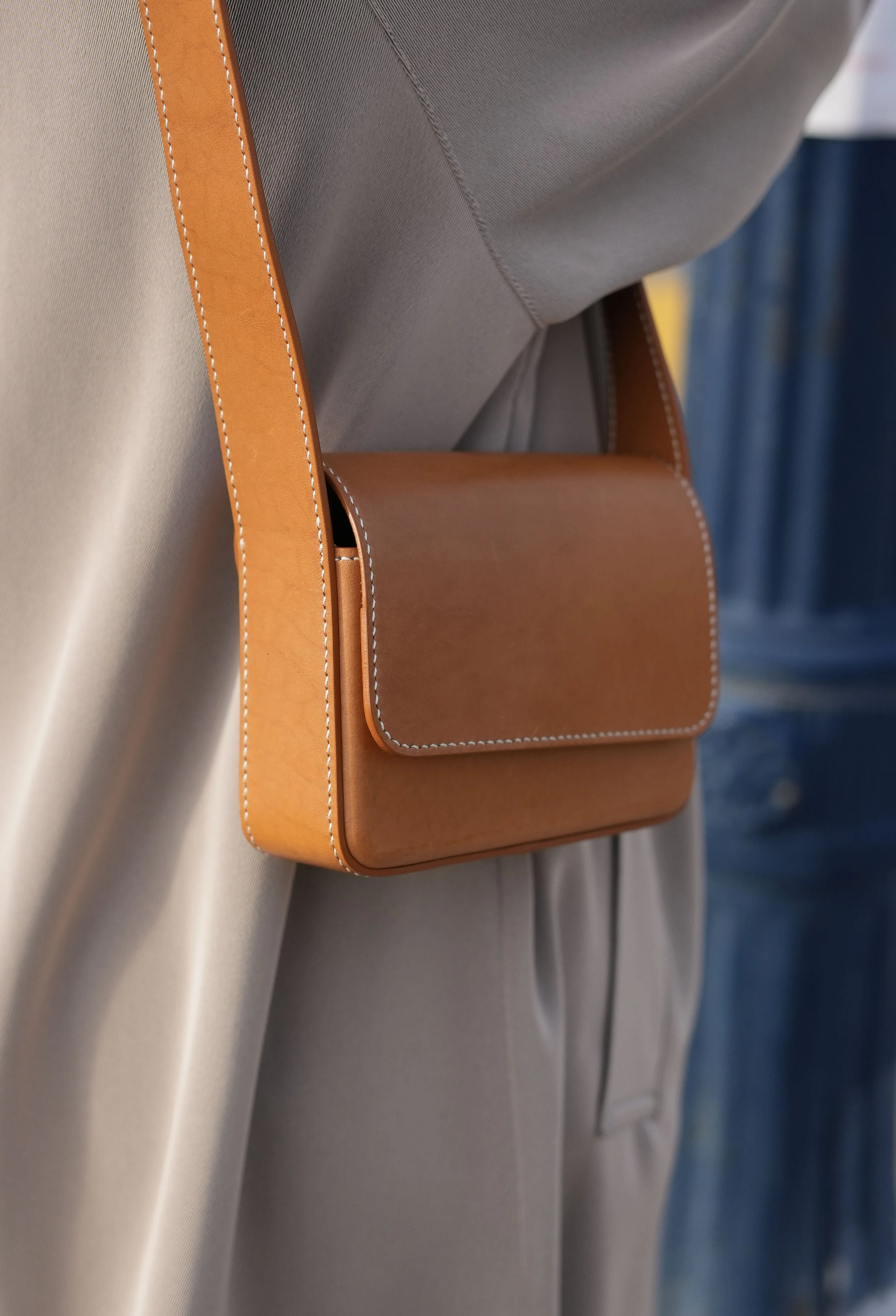
Ennie Bag
Very few tanneries produce cordovan in general and we sought out the best in the world. Shinki Hikaku is a tannery in Japan produces the most revered and most expensive horsehide in the world. These hides are made only using natural Mimosa tannins (bark of a tree) and avoids the much cheaper and quicker tanning process that results from the use of the carcinogenic heavy metals like chromium.
$1400